

Why Internal Communication Strategy Matters in Healthcare
Background
Healthcare providers operate in environments where communication is not just important, it is critical to patient safety, compliance, and operational efficiency.
Staff work around the clock across multiple departments and locations, often in high-pressure situations. Messages must be delivered quickly, understood clearly, and acted on without delay.
However, traditional channels such as email, intranets, and noticeboards often fail to support an effective internal communication strategy. Frontline healthcare workers rarely have time to check inboxes during shifts. Printed posters quickly become outdated. Leadership teams struggle to measure whether important updates have been seen or acknowledged.
A large UK healthcare organisation faced these exact challenges. With thousands of employees ranging from consultants and nurses to administrative staff and porters, they needed a more reliable approach to internal communications.
They chose Heed.
The Communication Challenges
1. Reaching Healthcare Staff Across All Roles
Many employees had limited access to email or the intranet. Critical updates about clinical protocols, IT systems, or operational changes often arrived late or were missed.
This gap in communication created risk particularly in busy ward environments where rapid response is essential.
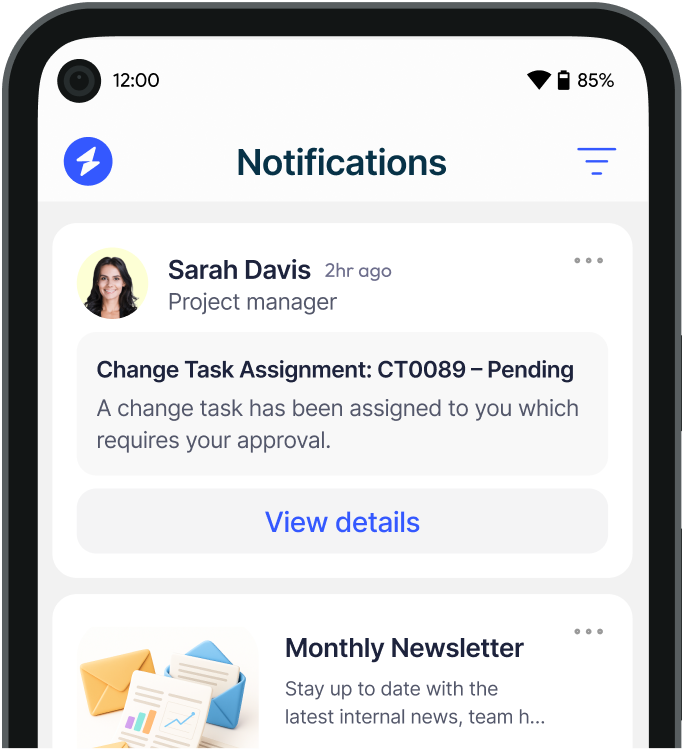
- Shift change alert notifications for healthcare and HR
2. Meeting Compliance and Regulatory Requirements
Healthcare organisations must demonstrate compliance with training deadlines, safety protocols, and policy updates.
The organisation lacked:
- Reliable read confirmation
- Audit trails for acknowledgements
- Timely reminders for mandatory training
Without measurable visibility, compliance relied on assumption rather than evidence.
- Regulatory compliance communication software for enterprise
3. Improving Staff Engagement and Alignment
Internal surveys revealed that many employees felt disconnected from leadership messaging. This impacted morale and made it harder to maintain alignment around organisational goals.
An improved internal communication strategy was required - one that prioritised visibility, targeting, and measurable engagement.
Why Heed Was Selected
Heed provided a direct-to-screen communication solution that supported the organisation’s new internal communication strategy.
Messages appeared instantly on:
- Desktop computers
- Shared ward terminals
- Clinical tablets
This removed reliance on email or printed materials.
Key capabilities included:
- Targeted communications by role, department, or location
- Digital acknowledgement tracking for compliance
- Real-time reporting dashboards
- Easy message creation using communications templates
- Message scheduling
The availability of pre-designed communications templates allowed the team to standardise urgent alerts, training reminders, and campaign messaging saving time and ensuring clarity. Communication teams could design and schedule messages without needing specialist technicalsupport, allowing them to respond quickly when circumstances changed
Implementation: A Structured Internal Communication Strategy Rollout
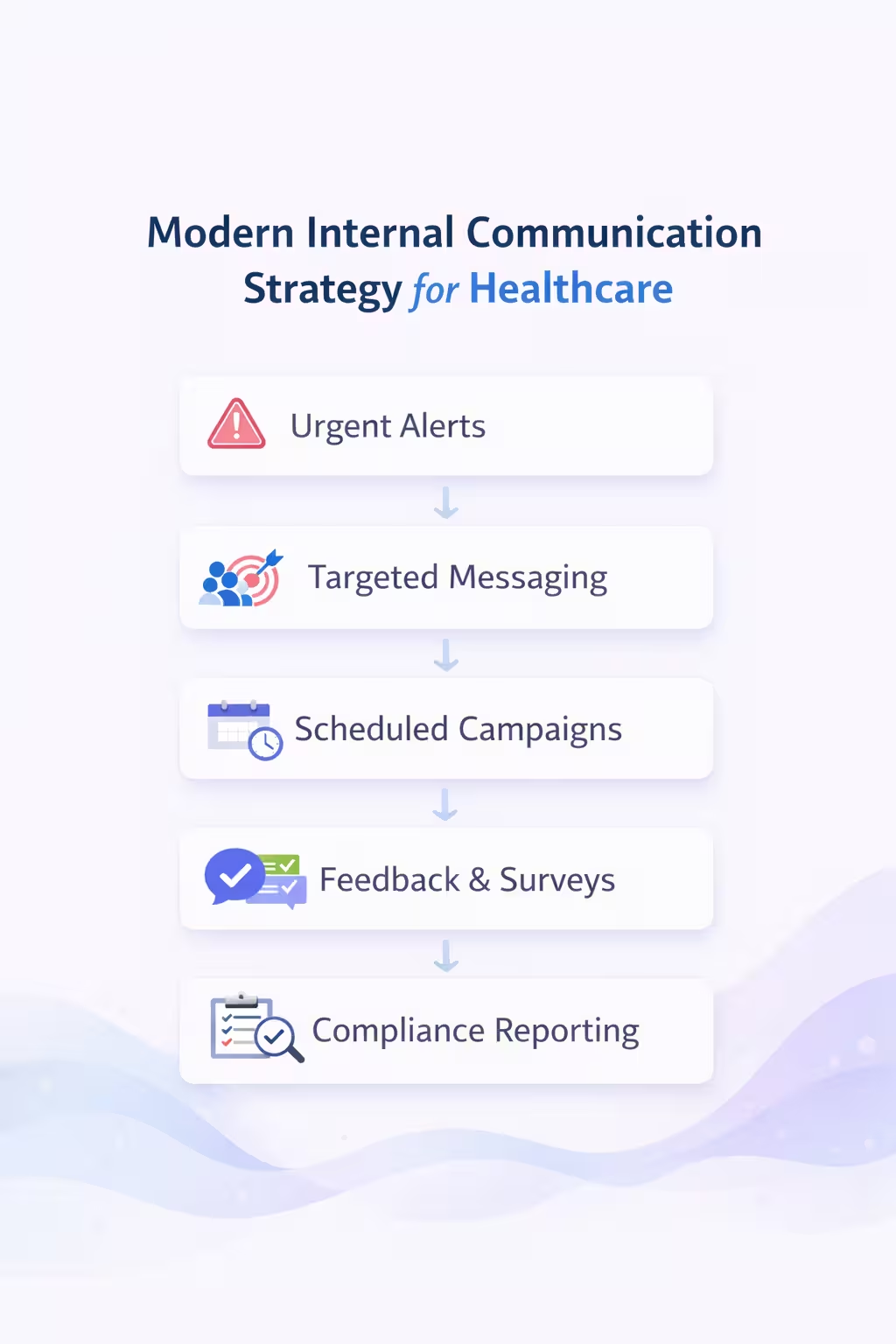
Stage One: Urgent Alerts
The organisation began by focusing on using Heed's desktop alerts for time-sensitive communications:
- Fire evacuation procedures
- Infection control updates
- IT service interruptions
Urgent alerts achieved immediate visibility across wards and departments with staff reporting that they felt more confident about receiving critical messages on time.
Stage Two: Broader Staff Communications
Once critical messaging was established, Heed supported wider internal communications. Leadership teams began using Tickers and Alerts to send updates about new services, staff recognition, and wellbeing programmes. This created a more consistent flow of information across departments.
- Leadership updates
- Staff recognition
- Wellbeing campaigns
- Service announcements
This created consistency and transparency across teams.
Stage Three: Integrated Communication Planning
Finally, Heed became part of the organisation’s long-term communication strategy. Scheduled reminders, training prompts, and feedback surveys are managed within the platform. This helps create a reliable rhythm of communication and gives staff a chance to provide input as well as receive updates. Heed has become embedded in the organisation’s long-term internal communication strategy.
The team use communications templates to schedule:
- Training reminders
- Compliance prompts
- Policy updates
- Staff surveys
Measurable Results After Six Months
Within six months, the healthcare organisation achieved measurable improvements:
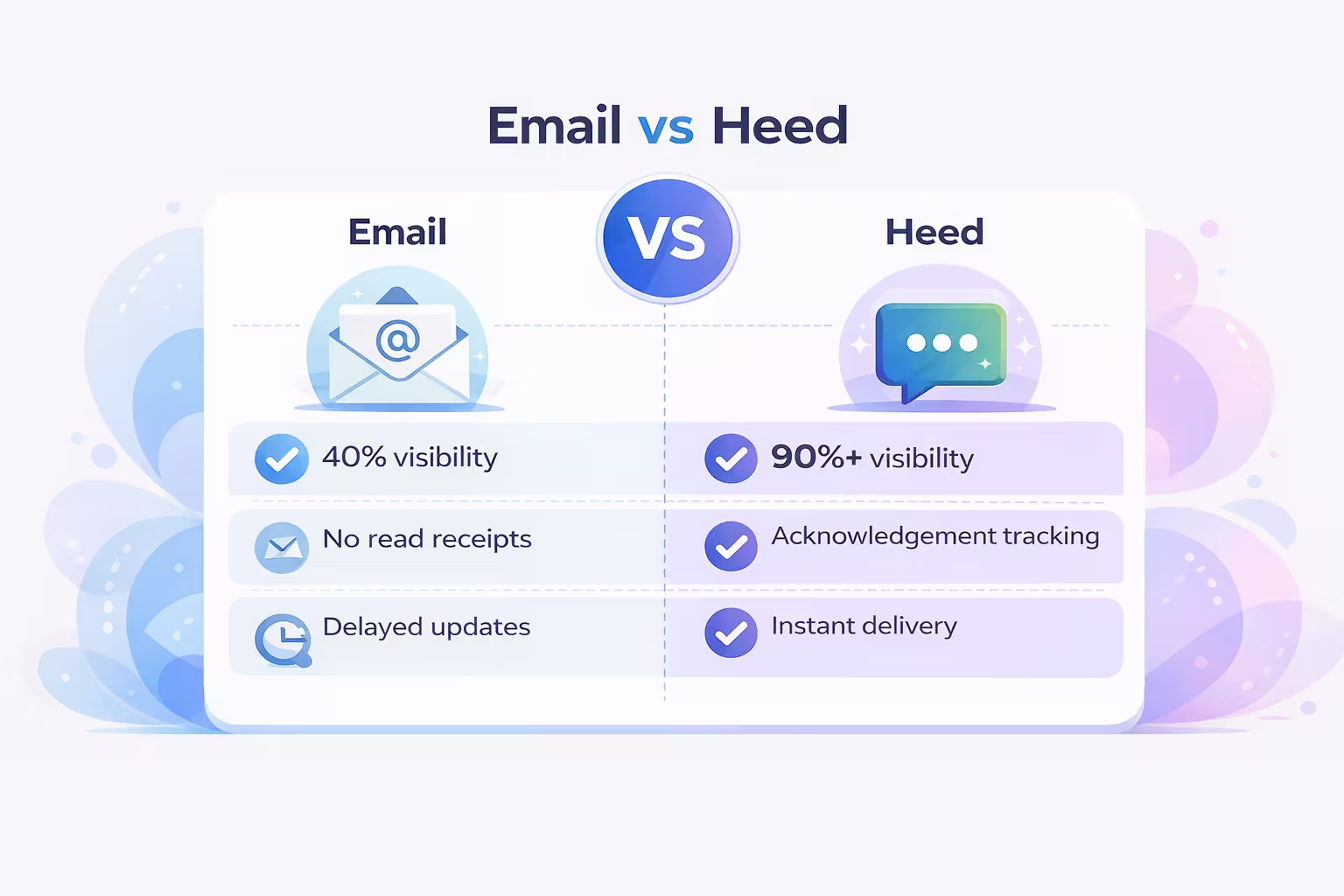
- 90%+ visibility on urgent alerts (compared to less than 40% via email)
- Increased training completion rates
- Faster incident response times
- Reduced printing and administrative costs
- Improved staff survey results regarding feeling informed
One senior manager commented:
“Previously we had no way of knowing if an urgent message had reached everyone. Now we can be confident staff are aware within minutes. It has changed how we operate day to day.”
Daily Use of Heed in Healthcare Settings
Today, Heed supports a wide range of healthcare communication needs as part of the internal communication plan:
- Patient safety alerts
- Infection control updates
- Training and compliance reminders
- IT system downtime notifications
- Flu vaccination campaigns
- Staff wellbeing initiatives
- Strategic leadership communications
By combining urgent alerts with scheduled communications templates and interactive surveys, the organisation has built a modern, measurable internal communication strategy.
Lessons Learned: Building a Strong Internal Communication Strategy
Visibility Is Essential
Critical information must reach frontline staff instantly and cannot be left to chance. Direct communication to screens removes uncertainty.
Relevance Builds Trust
By targeting messages to the right groups, the organisation avoided overwhelming staff and kept attention focused
Feedback builds engagement
Surveys and polls allowed staff to share their views and helped leadership adapt strategies to meet frontline needs
Measurable Communication Supports Compliance
Digital acknowledgements provide audit-ready reporting.
Routine Drives Adoption
Embedding Heed into daily workflows ensures long-term success. Building Heed into the everyday rhythm of communication ensured the system became part of standard practice rather than an occasional tool.
The future of communication in this healthcare provider
The healthcare provider now views Heed as a core part of how it communicates with staff. Plans are in place to extend use across more satellite sites and community teams, link with HR systems to provide automated onboarding reminders, expand health and wellbeing initiatives to help address staff retention challenges, and use reporting data to refine how and when messages are delivered. With these developments, Heed will continue to play a central role in keeping staff connected, compliant, and informed.
Conclusion
This case study shows how a major healthcare provider improved internal communication by adopting Heed. The organisation moved from inconsistent and unreliable channels to a clear and measurable approach. Staff now receive urgent alerts in real time, compliance tasks are completed more reliably, and overall engagement has improved. In healthcare, communication cannot be an afterthought. It must be timely, targeted, and trusted. Heed provides the tools to make that possible.






.svg)
.svg)