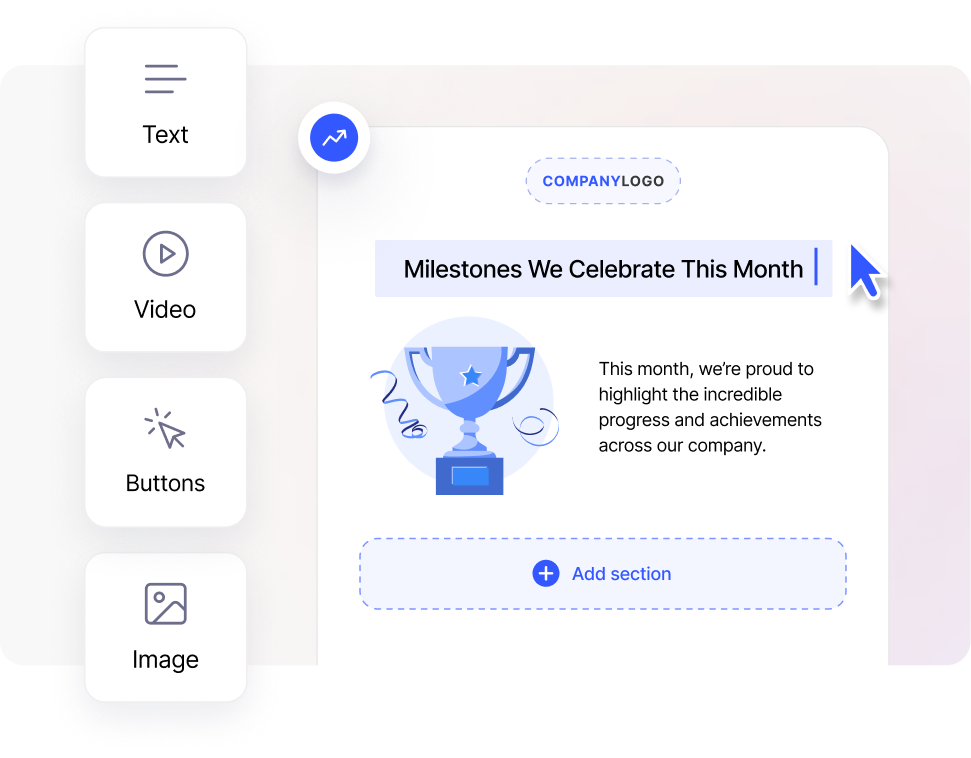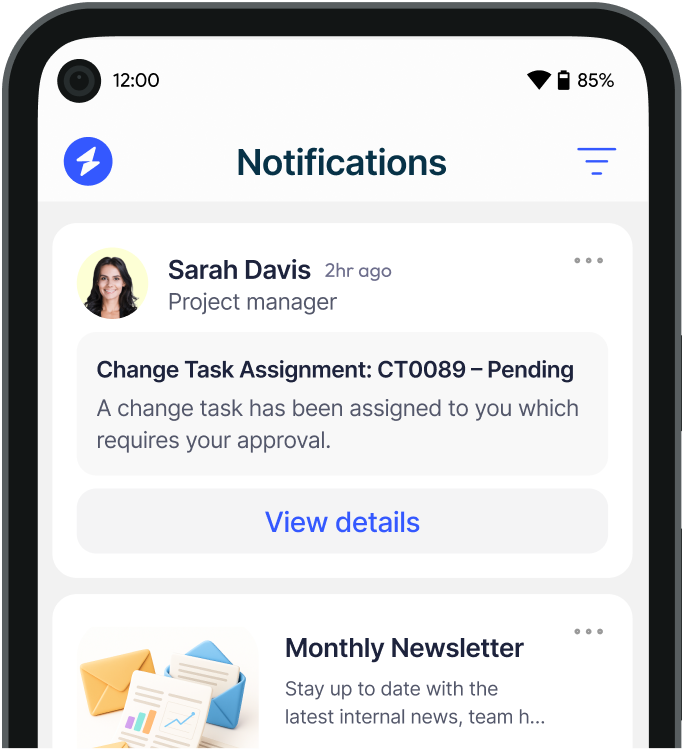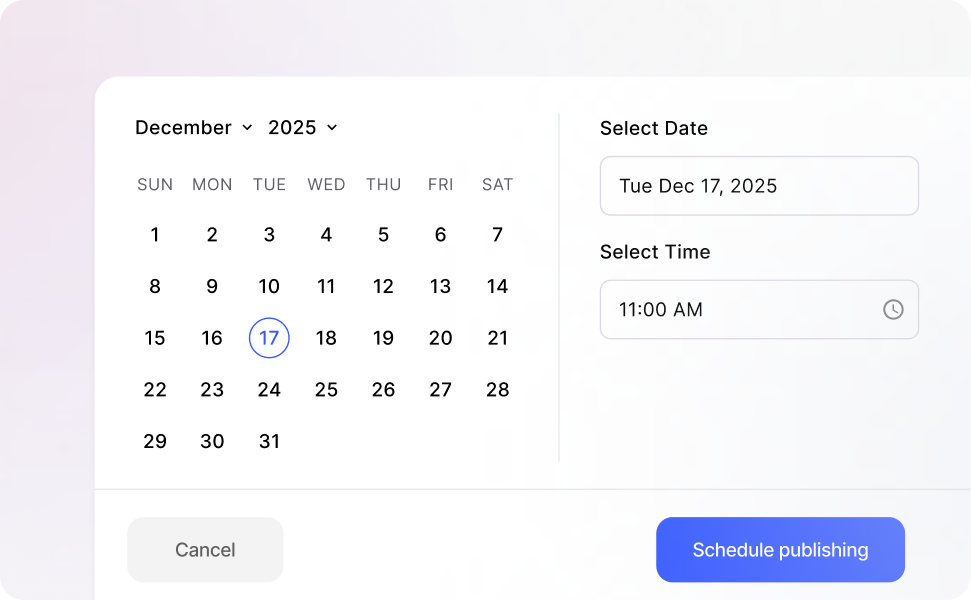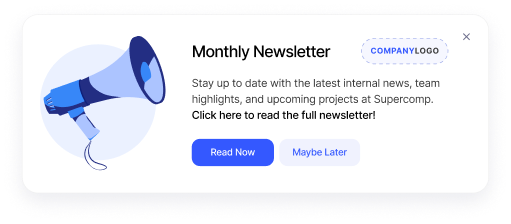
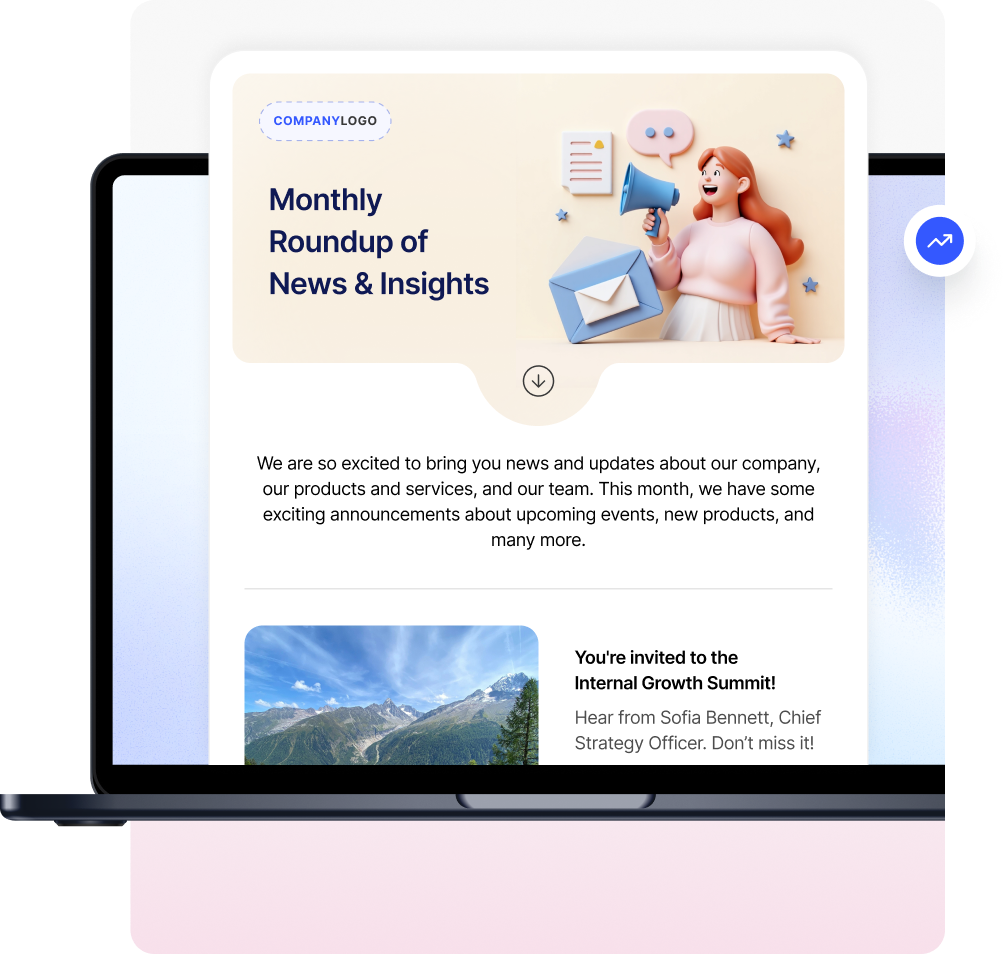
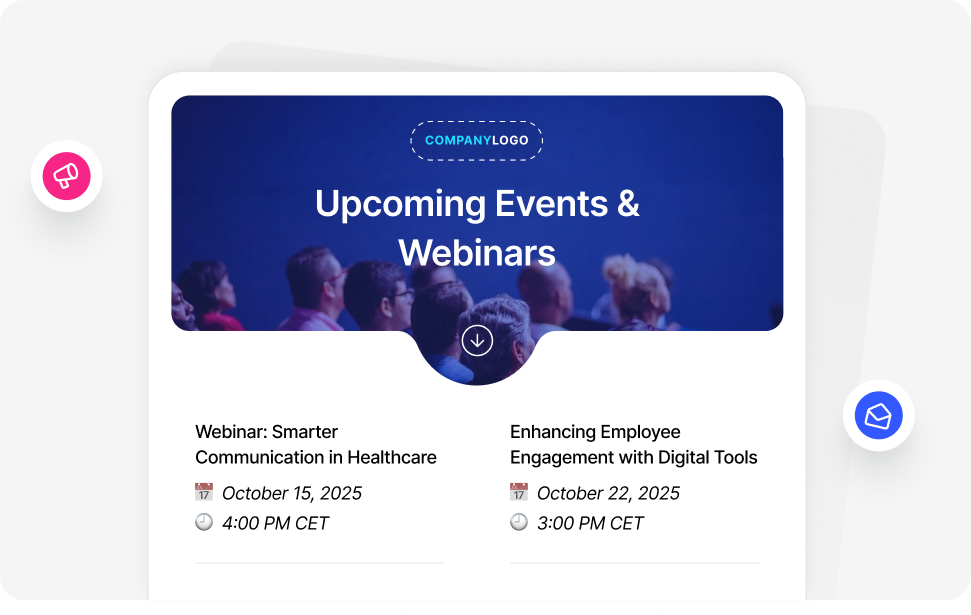
Build stunning newsletters in minutes with our intuitive editor. Add text, images, links, polls, and more, no design or coding skills needed. Create your own newsletter templates or customise one from the Heed template library.


Schedule a demo and see what great internal communication looks like.
Schedule a Demo

FAQ
Everything you need to know about desktop alerts - from how they work to how they're deployed across your organisation.
A strong company newsletter typically includes a brief message from leadership, company news and updates, team spotlights or employee recognition, upcoming events or deadlines, and a clear call to action. The key is to mix must-know information with content employees find genuinely interesting, so the newsletter becomes something people open rather than something they scroll past.
Most organisations send a company newsletter monthly or fortnightly. Monthly works well for longer-form updates and culture content; fortnightly suits faster-moving businesses with more frequent news. Weekly newsletters risk becoming noise unless the content is consistently high quality and kept short. The right cadence is the one your team can sustain without the quality dropping.
The most effective internal newsletters use a consistent, scannable layout: a clear subject line, a short opening section that gives the headline news, modular content blocks for different topics, and a single prominent call to action. Keeping each section brief and using visuals to break up text improves read rates significantly. A template that stays consistent issue to issue also builds familiarity, so employees know where to look for what they need.
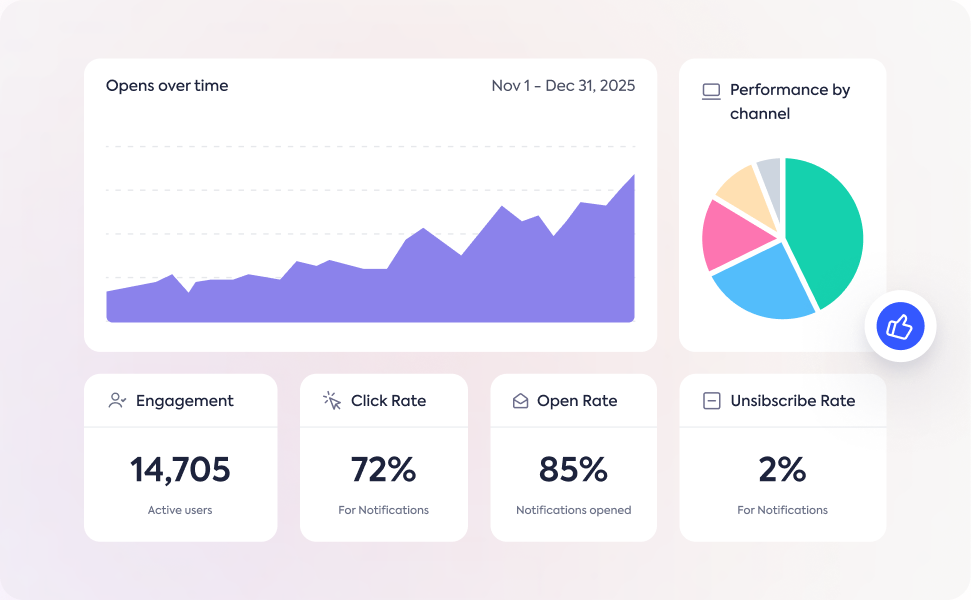
The core metrics are open rate, click-through rate and, where acknowledgement is required, read confirmation. Open rate tells you whether your subject line and send time are working. Click-through rate shows whether the content is relevant enough to prompt action. For regulated industries or compliance-driven communications, acknowledgement tracking gives a timestamped record of who has read each issue, which is useful at audit time.
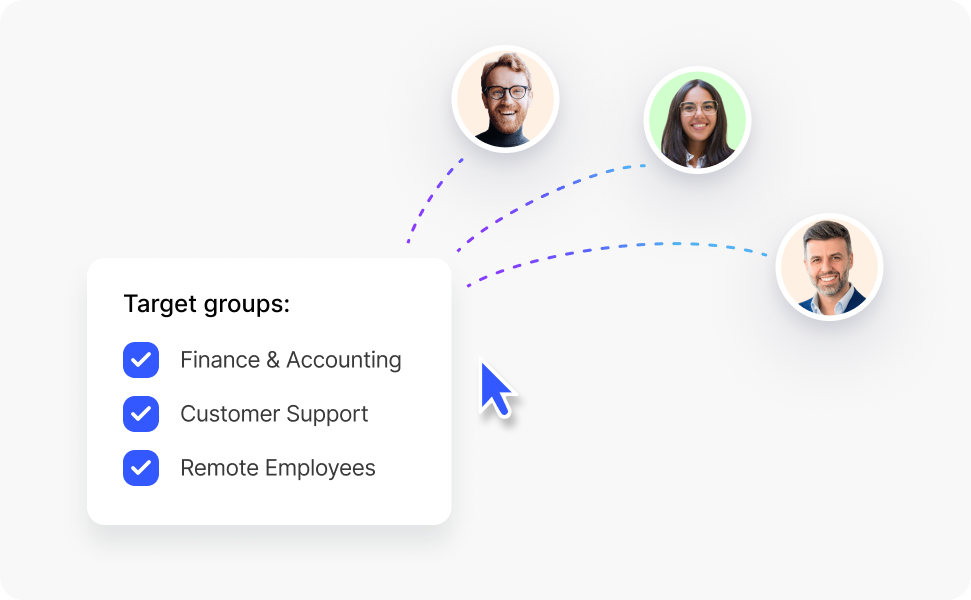
Employees read newsletters that feel relevant to them, arrive at a predictable time and are short enough to scan in two minutes. Personalisation by team, location or role significantly improves open rates. Recognition and spotlight content consistently outperforms policy updates in engagement, so mixing the two keeps readership up. Delivery channel also matters: newsletters sent only by email miss employees who rarely check their inbox, so combining email with a desktop notification or intranet post extends reach.
Talk to use about keeping your employees informed, engaged and inspired - book a call today!
Book a Call