Hospital emergency codes are standardised colour-coded announcements broadcast over a public address system to alert staff to a specific type of emergency. The colour-code system exists for one reason: it allows every member of staff to understand the nature and location of an emergency and begin their assigned response immediately, without the announcement causing panic among patients, visitors or staff in unaffected areas.
The system was developed in North America and is most widely used in the United States and Canada. The Hospital Association of Southern California (HASC) introduced a standardised set that has been broadly adopted, though codes can still vary between hospital systems, states and provinces. This guide covers the most widely recognised codes, with the response expected at each. Always verify your own institution's specific code definitions in your local emergency operations plan.
Each code below includes the standard trigger, the expected staff response and any critical variations to be aware of.
Code Red is one of the most universally standardised codes. It indicates a confirmed or suspected fire anywhere in the facility.
Trigger: discovery of smoke, flames, the smell of burning, or activation of the fire detection system.
Staff response: the RACE protocol applies to all staff in the affected area.
Staff not in the immediate area should stand by for evacuation instructions and ensure their zone is clear of patients requiring assistance.
Code Blue calls the resuscitation team to a specific location to respond to a cardiac arrest, respiratory arrest or life-threatening medical emergency.
Trigger: a patient or person found unresponsive, pulseless or not breathing.
Staff response: the first responder begins CPR immediately and calls for help. The resuscitation team responds to the location. All non-essential staff clear the area and keep corridors free for the responding team and their equipment. Someone should be stationed at the entrance to direct the team on arrival.
Variation: some facilities use Code Blue specifically for adults and a separate code (often Code White or Code Pink) for paediatric emergencies. Check your local protocol.
Code Grey is called when a patient, visitor or member of staff is behaving in a violent or threatening manner that poses a risk to others.
Trigger: physical assault, credible threat of violence, or behaviour that cannot be safely managed by present staff.
Staff response: non-essential staff and patients should leave the area calmly. Security responds to the location. Clinical staff should not attempt physical intervention unless trained to do so. Document the incident as soon as it is safe.
Variation: some facilities use Code Grey for infrastructure or utility failure (loss of power, water, gas). This is a significant variation that makes local training essential.
Code Black is used when a bomb threat has been received or when there is a credible threat against a specific individual in the facility.
Trigger: a telephone or written bomb threat, or a direct threat made against a staff member or patient.
Staff response: do not touch or move any suspicious object. Notify security and management immediately. If a telephone threat is received, keep the caller talking and note as much detail as possible: exact wording, voice characteristics, background noise, and any specific information given about location or timing. Follow the facility's evacuation or shelter-in-place protocol as directed by management and emergency services.
Code White has two distinct uses depending on the institution. In some facilities it indicates a paediatric medical emergency; in others it is used for infant abduction (also known as Code Pink in many systems).
Trigger (medical): a child in cardiac arrest, respiratory arrest or life-threatening distress.
Trigger (abduction): an infant or child reported missing or an unauthorised person attempting to remove a child from the facility.
Staff response (abduction): all exits are monitored immediately. Staff should look for anyone carrying a large bag, wearing oversized clothing or acting suspiciously near exits. Do not confront directly; call security. No one should leave the building until the all-clear is given.
Code Pink is used interchangeably with Code White for infant abduction in many US facilities, and is also used for paediatric cardiac or respiratory emergencies in some systems.
Trigger: missing infant or child, or paediatric medical emergency depending on local protocol.
Staff response: as above for Code White. The overlap between Code White and Code Pink is one of the clearest examples of why staff must be trained on their specific institution's code set rather than assuming standardisation.
Code Orange is called when a chemical, biological or radiological substance has been released or spilled inside or immediately outside the facility.
Trigger: confirmed or suspected release of a hazardous material posing a risk to staff, patients or the public.
Staff response: evacuate the immediate area. Do not attempt to clean up or contain the spill without appropriate training and PPE. Seal off the area if possible. Clinical staff should be prepared to receive contaminated patients through a designated decontamination area rather than through normal patient entry points. Follow the facility's hazmat plan and await instruction from the incident commander.
Code Silver is one of the most serious codes and indicates an active threat with a weapon inside the facility.
Trigger: a person with a weapon who has used or is threatening to use it, or an active shooter situation.
Staff response: the Run-Hide-Fight framework applies.
Call 911 as soon as it is safe to do so. Do not re-enter the building until law enforcement gives the all-clear.
Some facilities use Code Purple specifically for child abduction, distinct from Code Pink or Code White. The response mirrors the abduction protocol above.
Trigger: a child reported missing or an unauthorised person attempting to remove a child from the facility.
Staff response: monitor all exits, do not confront the suspect directly, and call security immediately.
Code Yellow is called when a patient, particularly one who is confused, at risk or lacking capacity, is reported missing from their ward or unit.
Trigger: a patient cannot be located and there is concern for their safety.
Staff response: a systematic search of the facility begins immediately, starting with the patient's immediate area and expanding outward. All exits should be monitored. Staff should check stairwells, toilets, quiet rooms and outdoor areas. The patient's description and any known risks should be communicated to all searching staff. Notify security and, if the patient is not found promptly, escalate to local law enforcement.
Code Green indicates that a full or partial evacuation of the facility has been ordered.
Trigger: a condition that makes remaining in the building unsafe, such as a structural threat, major fire, or external incident.
Staff response: follow the facility evacuation plan. Patients are categorised by mobility and medical need and moved to designated assembly areas. Staff are assigned zones and are responsible for accounting for every patient in their area before leaving. Patients on life support or in surgery present specific challenges requiring pre-planned protocols.
Code Brown activates the hospital's major incident plan in response to an external emergency that is expected to generate a large number of casualties.
Trigger: notification from emergency services of a major incident such as a transport disaster, explosion, or mass casualty event.
Staff response: the major incident plan activates. Non-essential elective procedures are postponed. Additional staff are recalled. Triage areas and surge capacity protocols are initiated. The incident command structure takes over coordination.
The table below summarises all twelve codes with the expected first action. Definitions can vary between facilities — always verify your institution's specific code set.
Despite the HASC standardisation effort, there is no federal or national mandate in the US requiring all hospitals to use the same code set. Individual hospital systems, state hospital associations and accreditation bodies have each developed their own variations. The result is that the same colour can mean different things in different institutions: Code Grey means aggression in one hospital and infrastructure failure in another; Code White means paediatric emergency in one system and infant abduction in another.
This variability has direct safety implications. Agency nurses, locum physicians, contractors and staff transferring between facilities cannot assume the codes they know match those of the new environment. Every person working in a healthcare facility should complete a formal induction that covers the specific code set in use at that site, and that induction should be documented.
Several US states and health systems have moved toward plain-English announcements for certain emergencies, particularly active shooter situations, on the grounds that clarity matters more than brevity in high-stress moments. The debate between standardised colour codes and plain-English announcements is ongoing, and some facilities now use both in parallel.
The codes are only useful if every person on every shift knows them before they need them. In a large hospital with rotating shifts, agency staff, contractors and visitors, that is a genuine communication challenge.
A few principles make the difference between a code set that is known and one that is posted on a wall and ignored:
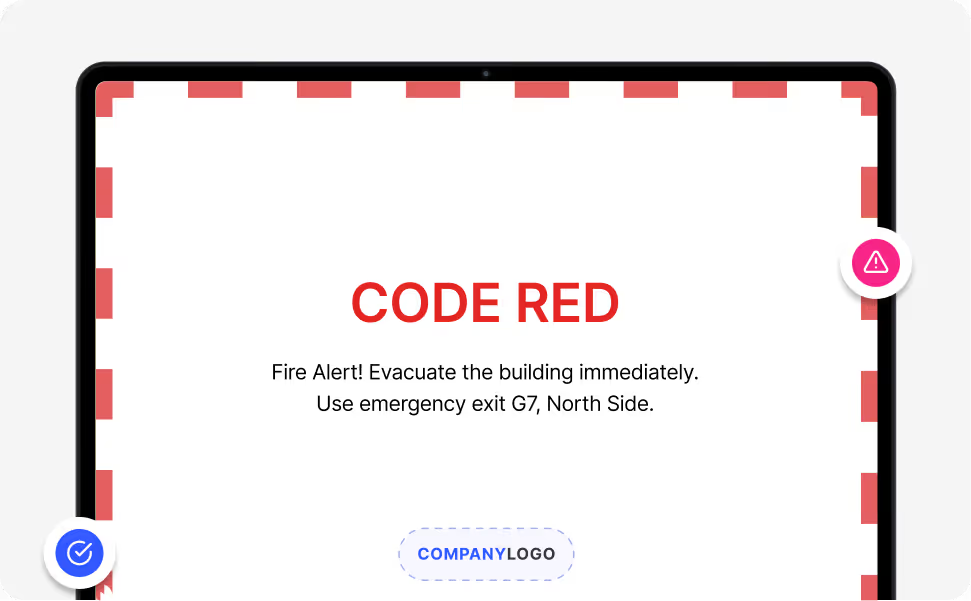
The public address system remains the primary broadcast channel for code announcements, but it has well-known limitations: staff in noisy environments may not hear it clearly, remote or outdoor areas may not be covered, and the announcement gives no way to confirm who has heard and understood it.
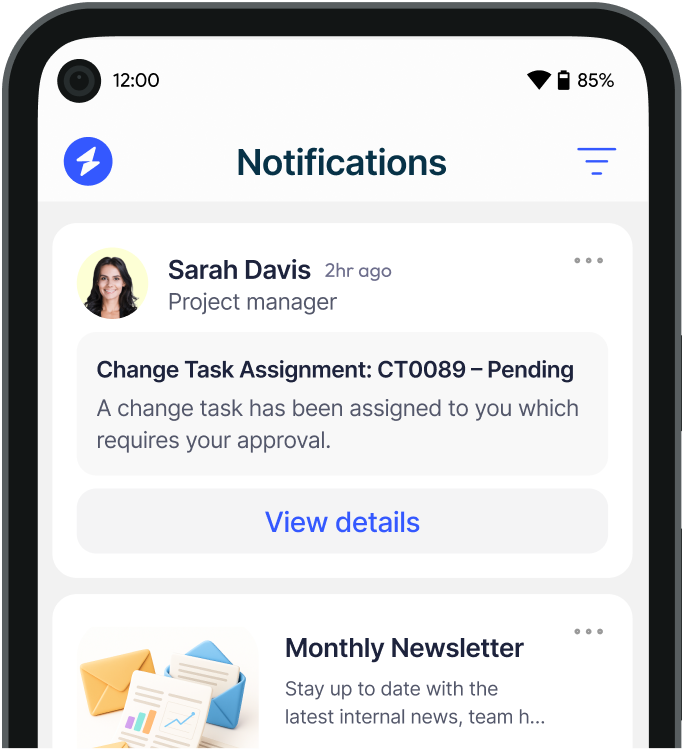
Supplementary digital channels close those gaps. A desktop alert pushed simultaneously to every logged-in device ensures the announcement reaches staff at workstations the moment a code is called. Corporate lock screens keep the current code and location visible on every device in use. For staff moving between areas, a desktop ticker provides a continuous low-level reminder of an active incident without interrupting clinical workflows.
For training and policy updates, acknowledgement tracking creates a timestamped record of every staff member who has confirmed receipt of the updated code set. In a Joint Commission survey or incident investigation, that record is the evidence that communication happened. See how this works for healthcare teams on our health and safety solution page and our emergency notification feature.
See how Heed streamlines internal communication across desktop, mobile, and shared screens - so every message gets noticed.
We’ll walk you through creating, targeting, and tracking notifications in real time, tailored to your organisation’s goals.
Schedule a Demo
See how Heed works across your channels, sites and shifts, and get answers to the questions specific to your industry and team size.
Schedule a Demo




Talk to us about keeping your employees informed, engaged and inspired - book a call today!
Book a Call
Proudly connecting teams worldwide, enhancing communication, and boosting employee engagement for a unified workforce.
.svg)
.svg)
© Heed 2026 - All Rights Reserved
.svg)