Workplace Safety Topics That Get Read, Not Ignored
The best safety topic in the world does nothing if the people most at risk never see it. In most organisations safety messages go out by email, which means they land in office inboxes and miss the warehouse floor, the night shift and the contractor who logs in once a week. This guide covers the topics worth running, from quick safety moments to full toolbox talks, and it tackles the part most teams get wrong: making sure every shift actually sees each message, and that you can prove it afterwards. The principles apply whether you answer to OSHA in the US or the HSE in the UK.
The safety topic is rarely the problem. The channel it travels through almost always is. A message that misses the night shift, the contractor or the person without a desk has not been communicated.
Safety topics, moments and meetings: what's the difference?
These three terms get used interchangeably, but they do different jobs. Picking the right format for the moment is the difference between a message that sticks and one that gets tuned out.
Safety moments
A safety moment is a short, focused prompt, usually a minute or two at the start of a shift, stand-up or meeting. It raises awareness of a single risk, such as a recent near miss, a seasonal hazard or a change on site, without trying to be a full briefing. Its strength is frequency: a small, regular nudge keeps safety present in people's minds between the bigger sessions. Browse 40 safety moment ideas and examples.
Toolbox talks and safety meetings
A toolbox talk goes deeper and stays task-specific. Delivered before a job, it walks through the hazards and the controls for the work about to be carried out, so the right precautions are fresh in everyone's mind. A safety meeting is the longer, scheduled version: a chance to review incidents, look at trends and agree actions as a team. Both work best when they are tied to real, current work rather than generic content. Browse toolbox talk topics.
Daily safety messages
Daily messages keep safety visible in the background. Short, regular and easy to act on, they reinforce good habits so safety stays a constant rather than a once-a-quarter event. Delivered through ambient channels such as a desktop ticker or screensaver, they reach people without interrupting the task in hand. Browse daily safety message ideas.
Explore workplace safety
Use the guides below to go deeper on any area. Each covers a specific topic with ready-to-use examples and practical advice for getting the message in front of every shift.
Safety Moments — forty ready-to-use prompts grouped by theme, five worked examples and how to run them so they stick.
Toolbox Talk Topics — task-specific talk ideas for construction, manufacturing, warehousing and more.
Fire Evacuation Procedures — how to plan, communicate and rehearse an evacuation that works under pressure.
Workplace Safety Hazards — the most common hazards by category, with guidance on how to communicate each one.
Daily Safety Messages — short, repeatable messages that keep safety visible between the bigger sessions.
Safety Incentive Programs — how to recognise safe behaviour and build a culture where safety is the norm.
Workplace safety topics by category
The strongest safety topics map to the risks your people actually face. The lists below group the most useful ones by category, with a note on the risk and how to get it across. Treat them as a starting point: run them as they are, or adapt them to your own site, sector and recent incidents.
Physical and environmental hazards
These are the everyday risks that cause the majority of workplace injuries. Because the risk is constant and the controls are simple to restate, they suit short, frequent reminders.
Slips, trips and falls: The most common cause of workplace injury, usually from spills, trailing cables, uneven surfaces or poor housekeeping. Remind teams to clear walkways straight away, report wet floors and wear footwear suited to the environment.
Manual handling and lifting: Poor lifting technique is a leading cause of musculoskeletal and long-term back injuries. Cover safe posture, team lifts for heavy loads and when to use a trolley or hoist rather than risk it.
Personal protective equipment (PPE): PPE is the last line of defence, not the first, and only works when it is the right type, correctly fitted and well maintained. Use this topic to check staff know which PPE each task needs and how to inspect it before use.
Hazardous substances: Cleaning chemicals, fuels, dusts and fumes all carry risks that are easy to underestimate. Reinforce safe storage, correct labelling and the COSHH or Hazard Communication data sheets that set out safe handling.
Machine and equipment guarding: Removed or defeated guards lie behind many serious incidents involving machinery. Stress that guards stay in place during operation and that equipment is isolated and locked off before any cleaning or maintenance.
Working at height: Falls from height remain one of the highest-severity risks on any site. Cover ladder checks, safe scaffold use, fall-arrest equipment and keeping the exclusion zone below clear.
Electrical safety: Damaged cables, overloaded sockets and unqualified repairs cause both fires and shocks. Encourage staff to check leads visually, never overload extension blocks and report faults rather than attempt a fix.
Driving and vehicle safety: For anyone who drives for work or operates plant, the vehicle is often the single biggest risk they face. Cover journey planning, fatigue, speed and the rules that keep pedestrians separated from moving vehicles on site.
Noise and vibration: Long-term exposure to noise and vibrating tools causes irreversible hearing loss and hand-arm vibration syndrome. Remind teams to wear hearing protection in marked areas and to take the breaks that high-vibration tasks require.
Workstation and screen ergonomics: Desk-based staff are not risk-free; poor posture and screen setup cause repetitive strain and back pain over time. Share simple workstation adjustments and the value of regular movement breaks.
Housekeeping: A tidy site is a safe site, and clutter is a precursor to most slip, trip and fire incidents. Make clear walkways, organised storage and prompt waste disposal everyone's responsibility, not just the cleaners'.
Emergency preparedness
People forget these procedures precisely because they are rare, which is exactly why regular refreshers are worth the time. When an emergency happens, there is no opportunity to look up the right response.
Fire safety and extinguisher use: Prevention comes first, but everyone should also know how to raise the alarm and which extinguisher suits which fire. Use this topic to refresh how to spot fire risks, keep escape routes clear and when not to tackle a fire at all.
Evacuation drills and assembly points: In a real evacuation there is no time to work out the route, so it has to be second nature. Confirm that staff know their nearest exit, the assembly point and the importance of leaving belongings behind.
First aid and medical emergencies: Quick, calm action in the first few minutes can change an outcome entirely. Make sure people know who the trained first aiders are, where the first aid kit and defibrillator are kept and how to summon help.
Severe weather: Storms, flooding, heatwaves and ice each bring their own hazards, from travel risk to heat stress. Cover sensible precautions and the triggers for sending staff home or closing a site.
Lockdown and security incidents: An intruder, threat or external incident calls for a different response from a fire. Walk through when to lock down rather than evacuate, how to stay out of sight and how to alert others discreetly.
Spill response: A small chemical or fuel spill can escalate fast if it is not contained. Cover the spill kit location, basic containment steps and the duty to report rather than quietly mop up.
Reporting an emergency: A clear, shared escalation path saves vital minutes when something goes wrong. Make sure everyone knows who to contact first, what information to give and how to raise the alarm out of hours.
Power or systems failure: Loss of power, lighting or IT can create hazards of its own, from trapped staff to failed safety systems. Cover where the emergency lighting is, how to shut down equipment safely and where to find updates.
Business continuity basics: If the site becomes inaccessible, staff need to know what to do and where instructions will come from. A short reminder of the continuity plan and how updates will reach them prevents confusion on the day.
Behaviour and safety culture
Rules only work if people follow them, and that comes down to culture. These topics shape whether everything else on this page actually gets acted on.
Near-miss and hazard reporting: The close calls you hear about today are the incidents you prevent tomorrow. Make reporting quick and blame-free, and show staff that reports lead to visible action rather than disappearing.
Speaking up and stop-work authority: A strong safety culture gives everyone, regardless of seniority, the right to stop work they believe is unsafe. Reinforce that raising a concern is always welcomed and never penalised.
Fatigue and tiredness: Tiredness slows reactions and clouds judgement as much as alcohol can, yet it is rarely treated as a safety issue. Encourage realistic shift patterns, proper breaks and flagging fatigue before it leads to mistakes.
Stress, workload and mental wellbeing: Mental health affects concentration, decision-making and physical safety. Normalise talking about workload and stress, and signpost the support available before pressure becomes a hazard.
Recognition and incentives: People repeat behaviour that gets noticed, so reward safe working rather than only reacting to lapses. Recognising good catches and safe habits builds a culture where safety is the norm.
Leading by example: Staff take their cues from managers, so visible compliance from the top matters more than any policy document. Remind leaders that the shortcuts they take become the shortcuts the team takes.
Lone working: Working alone or off site removes the safety net of nearby colleagues. Cover check-in procedures, how to raise the alarm and the tasks that should never be done alone.
Drugs and alcohol: Impairment on site puts the individual and everyone around them at risk. Make the policy clear, explain the reasons behind it and remind staff that some prescription medicines also affect performance.
New starter and contractor inductions: Newcomers are statistically more likely to be injured because they do not yet know the site or its hazards. Make sure every new starter and visiting contractor gets the rules, risks and emergency procedures before they begin.
Building safety topics into a routine
A single safety message rarely changes behaviour. Consistency does. The most effective programmes run a mix of formats on a predictable rhythm, so safety becomes part of the working week rather than an occasional broadcast.
Daily: a one-minute safety moment at shift start or stand-up.
Weekly: a short toolbox talk tied to the week's work or a recent near miss.
Monthly: a fuller safety meeting reviewing incidents, trends and agreed actions.
As needed: an immediate alert whenever a new hazard, incident or procedure change occurs.
The right cadence depends on your industry and risk profile. Regulated and high-hazard environments such as construction, manufacturing and healthcare tend to communicate more frequently, and to keep clearer records of having done so.
Aligning safety topics with regulations (OSHA and HSE)
Good safety communication is also a compliance asset. In the US, OSHA expects employers to keep a workplace free from recognised hazards under the general duty clause, and its most common citations cluster around fall protection, hazard communication and respiratory protection. In the UK and much of Europe, the HSE frames the same obligation through safe working practices, risk assessment and the duty to inform and train employees.
Whichever regime applies to you, the expectation is the same in spirit: that staff are told about the risks they face, in good time, in a way they can understand. Running your safety topics consistently, and keeping a record that they were delivered and acknowledged, is one of the clearest ways to evidence that you have met that duty if an incident is ever investigated.
Getting safety topics in front of everyone (the part most teams miss)
Here is the gap. Email-only safety comms reach the people who least need reminding and miss the frontline who need it most, and at audit time you have no reliable record of who actually read what. A strong topic delivered through a weak channel is still a missed message.
The fix is to match the channel to the urgency. Critical items, such as a new hazard on site or an evacuation change, belong on a desktop alert or corporate lock screen that staff cannot scroll past. Ongoing awareness suits ambient channels like screensavers, desktop wallpaper and a desktop ticker, which keep safety visible without interrupting work. And for anything that has to be evidenced, acknowledgement tracking gives you a timestamped record of who has seen each message, across desk-based and deskless teams alike. That combination, multi-channel reach plus a clear audit trail, is what turns a safety topic from a hopeful email into a message you can stand behind. See how this works for safety-critical teams on our health and safety solution.
See Heed in Action
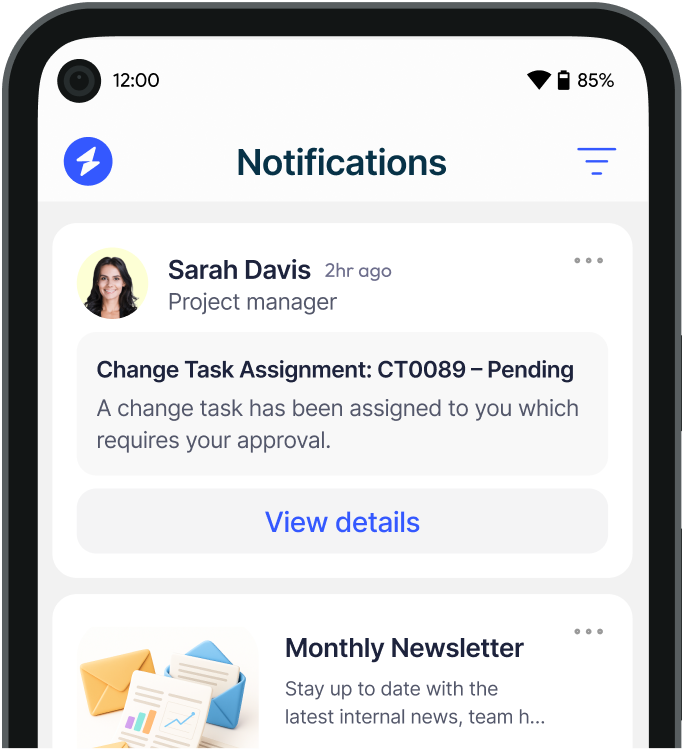
See how Heed streamlines internal communication across desktop, mobile, and shared screens - so every message gets noticed.
We’ll walk you through creating, targeting, and tracking notifications in real time, tailored to your organisation’s goals.


.svg)




.svg)
.svg)