40 Safety Moment Ideas and Examples That Get Noticed
A good safety moment takes a minute and can prevent an injury, but only if it reaches the people doing the work. These forty ideas give you something relevant to say at the start of any shift or meeting, grouped by theme so you can pick one to fit the day. Five worked examples show how to deliver one, and a simple approach makes sure every shift actually sees it.
A safety moment that only reaches the people already in the room has already failed. The shift that most needs it is the one that was not there.
What makes a good safety moment?
A good safety moment is short, specific and actionable. It takes one to three minutes, opens a shift or meeting, and focuses on a single risk tied to the work, the season or a recent event, so the listener knows exactly what to do differently. Use the ideas below as ready-made prompts and adapt each to your own site.
40 safety moment ideas
Grouped by theme so you can pick one that fits the day, the season or a recent near miss. Each is written as a prompt you can read out and expand on in a minute or two.
Everyday hazards
Slips, trips and falls: Point out that most falls happen on level ground, not from height. Ask everyone to clear one trip hazard in their area before they start.
Manual handling: Recap the basics: assess the load, bend the knees, keep it close, and ask for help with anything awkward or heavy.
PPE checks: Remind the team that PPE only protects if it is worn and in good condition. Encourage a quick check of their own kit for damage.
Housekeeping: Note how quickly a tidy area turns hazardous. Set a simple goal: leave your workspace clearer than you found it.
Working at height: Stress that even a short fall can cause serious injury. Cover ladder checks and never overreaching from a step.
Hazardous substances: Pick one chemical used on site and ask whether everyone knows where its safety data sheet is and what to do on contact.
Electrical safety: Ask the team to look for damaged leads, overloaded sockets or trailing cables today, and to report anything they find.
Hand tools and equipment: Remind everyone that the right tool, in good condition, is itself a safety control. Damaged tools should be tagged and removed.
Health and wellbeing
Staying hydrated: In hot conditions, remind the team that dehydration affects concentration and reaction time. Encourage regular water breaks.
Working in heat or cold: Cover the signs of heat stress or cold exposure and the importance of dressing and pacing for the conditions.
Fatigue: Explain that tiredness impairs judgement much like alcohol does. Encourage people to flag fatigue rather than push through it.
Mental health and stress: Take a moment to normalise talking about pressure and workload, and remind the team where to find support.
Workstation set-up: For desk-based staff, run through screen height, chair position and the value of standing and moving regularly.
Taking breaks: Reinforce that breaks are a safety measure, not a luxury, especially on repetitive or high-concentration tasks.
Eye health and screen time: Share the simple rule of looking at something distant every twenty minutes to rest the eyes.
Emergency preparedness
Know your exits: Ask each person to picture their nearest fire exit and the route to the assembly point from where they are standing.
Fire extinguisher basics: Recap which extinguisher suits which fire, and the rule that personal safety always comes before tackling a fire.
First aid awareness: Remind everyone who the first aiders are and where the nearest kit and defibrillator are kept.
Evacuation refresher: Walk through what a real evacuation looks like: leave belongings, move calmly and report to the assembly point.
Severe weather: Ahead of forecast bad weather, cover the specific risks for your site and the plan if conditions worsen.
Spill response: Point out the nearest spill kit and the first three steps if someone finds a chemical or fuel spill.
Reporting an emergency: Make sure everyone knows the single contact to raise the alarm, and what information to give.
Behaviour and culture
Reporting near misses: Share a recent near miss and thank whoever reported it. Reinforce that close calls are how the next injury is prevented.
Speaking up: Remind the team that anyone can stop a job that feels unsafe, and that doing so is always backed, never blamed.
Complacency: Highlight how routine tasks cause many incidents precisely because they feel low risk. Ask everyone to treat the familiar with fresh attention.
Distractions and phones: Discuss how a glance at a phone at the wrong moment causes incidents, especially around vehicles or machinery.
Lone working: For anyone working alone today, confirm the check-in arrangement and how they would raise the alarm.
Welcoming new starters: Remind the team that newcomers do not yet know the site. Encourage everyone to point out hazards and good practice.
Leading by example: A prompt for supervisors: the standard you walk past is the standard you accept, so model the behaviour you expect.
Learning from incidents: Briefly revisit a past incident and the change that came from it, to show that lessons turn into action.
Seasonal and site-specific
Dark mornings and evenings: When the clocks change, remind everyone that car parks, yards and walkways are harder to see in. Encourage high-visibility clothing and reporting any lighting that has failed.
Driving for work: Ask drivers to plan routes and breaks before they set off, adjust for the weather and leave the phone alone until they have parked.
Vehicles and pedestrians: Recap the walkways on site and the rule never to walk behind a reversing vehicle. Make eye contact with a driver before crossing their path.
Contractors on site: Let the team know who is working on site today, where, and under which permits, so nobody walks into a work area unexpectedly.
Machine guarding and isolation: Remind operators that guards are never bypassed, and that equipment is isolated and locked off before any cleaning or maintenance.
Office and meeting safety
Fire doors: Point out that a fire door only works when it is closed. Ask everyone to remove any wedges or props they see today.
Stairs: Encourage holding the handrail and keeping phones in pockets on stairs, especially when carrying anything.
Cables and clutter in shared spaces: In hot-desking areas and meeting rooms, ask people to route cables safely and leave walkways clear for the next person.
Visitors: Remind hosts that they are responsible for their visitors, including signing them in and taking them to the assembly point in an evacuation.
Working from home: Ask hybrid staff to apply the same standards at home: a proper workstation, no trailing cables and a regular check-in with their manager.
What does a good safety moment example look like?
A good safety moment example follows a simple pattern: name one hazard, connect it to something real on your site, state the single action you want people to take, then ask a question. The five examples below follow that pattern and can each be read out in under two minutes. Adapt the details to your own workplace.
Example 1: Slips on a wet floor
"Yesterday someone slipped on rainwater tracked into the loading bay. They caught themselves, so nobody was hurt, but it was close. Most falls happen on level ground, just like this one. Today, if you see a wet patch, do not step around it: put a sign out, dry it or report it. Does everyone know where the nearest wet floor sign is kept?"
Example 2: Fatigue on the night shift
"Tonight is the last of four nights for many of you, and that is when tiredness catches up. Tired people miss things and take shortcuts without noticing. If you feel your concentration slipping, tell your supervisor and swap to a lower-risk task for a while. Nobody will think less of you for it. What helps you stay alert on a long shift?"
Example 3: Know your exit before the meeting starts
"Before we start, take a look around. If the alarm went off now, which exit would you use, and where is our assembly point? This room is not one most of us use every day, so the route may not be the one you would guess. If anyone is unsure, I will point it out now."
Example 4: Stopping a job that feels unsafe
"Last week one of the team stopped a lift because the load did not look properly secured. It took ten minutes to fix and nobody was hurt. That is exactly what we want. Anyone here can stop a job that feels unsafe, and you will always be backed for it. Has anyone seen something recently that made them hesitate?"
Example 5: Dark evenings in the car park
"The clocks go back this weekend, so most of us will be leaving in the dark. The car park lighting near the side gate is being repaired, so use the main path and wear something visible if you are walking. Drivers, slow right down near the exits. Has anyone noticed any other areas that are poorly lit?"
If you need a shorter prompt for a daily briefing or digital screen, see our daily safety messages.
How to run a safety moment that sticks
The idea matters less than the delivery. A few principles keep safety moments from becoming background noise:
Keep it short: one to three minutes, one topic. Anything longer becomes a meeting.
Make it relevant: tie it to today's work, the season or a recent event, so it lands rather than feeling generic.
Make it two-way: ask a question or invite an example. People remember what they contribute to.
Rotate who leads: sharing the role keeps moments fresh and builds ownership across the team.
Follow up: if a hazard is raised, act on it visibly. Nothing kills engagement faster than reports that go nowhere.
Run them often: a safety moment at the start of every shift or meeting builds a habit, with longer toolbox talks kept for specific tasks.
Make sure every safety moment is seen
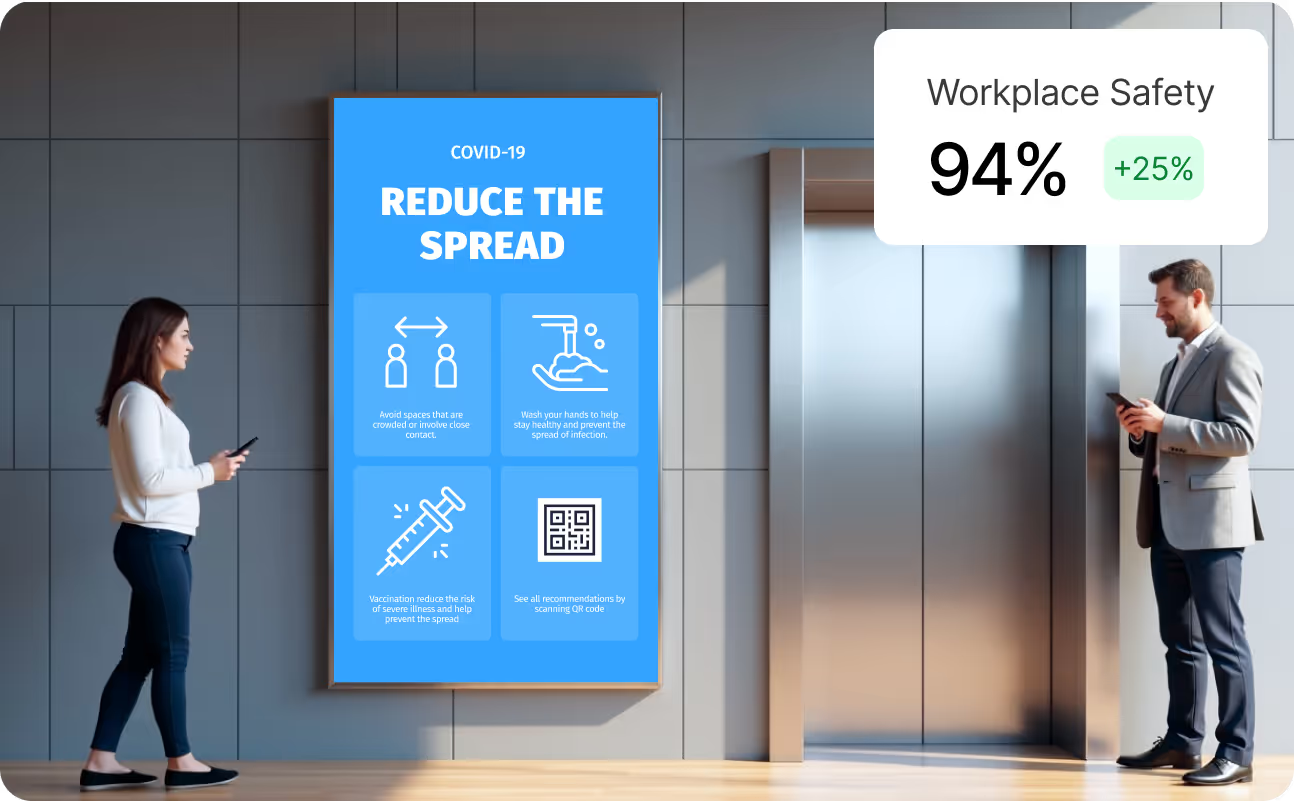
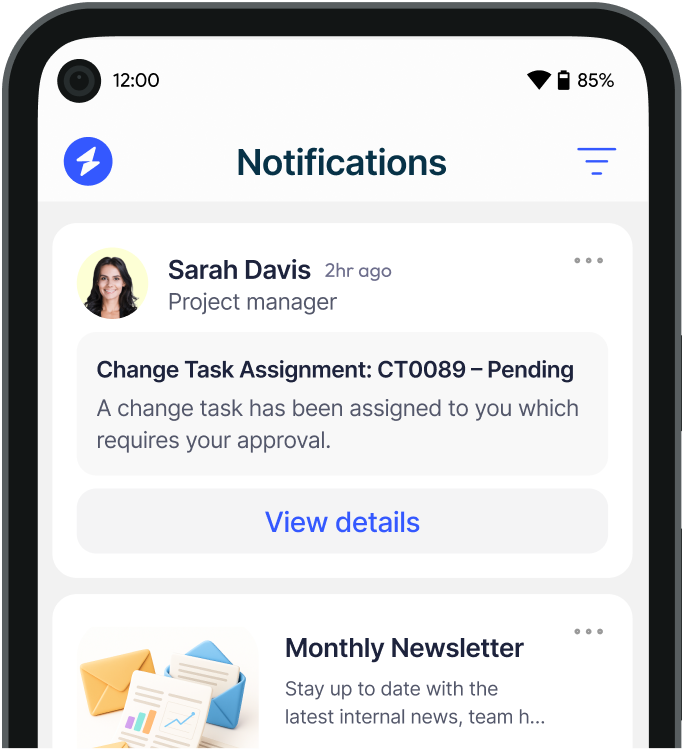
A safety moment only works if it reaches the people on the floor, not just those in the room. For distributed shifts, remote workers and deskless staff, the message has to travel beyond the morning huddle. Delivering safety moments through desktop alerts, lock screens, screensavers and a desktop ticker keeps them visible across every shift and location, and acknowledgement tracking gives you a record that each one was seen. It is the same principle that runs through all workplace safety topics: the best message fails if it is delivered through a channel people ignore. See how this works for safety-critical teams on our health and safety solution.
See Heed in Action
See how Heed streamlines internal communication across desktop, mobile, and shared screens - so every message gets noticed.
We’ll walk you through creating, targeting, and tracking notifications in real time, tailored to your organisation’s goals.





.svg)
.svg)
.svg)