

As wildfires continue to devastate parts of Canada, France, Spain, Scotland and other regions around the world, organisations are once again facing a difficult question:
If an emergency affected your employees today, could you reach every one of them quickly enough?
Over the past few weeks we've seen hundreds of thousands of people evacuated from homes, businesses and holiday destinations as wildfires spread rapidly across Europe and North America. Roads have closed with little warning, air quality has deteriorated and workplaces have had to adapt almost overnight.
While every emergency is different, one thing remains constant: communication is critical.
At a Glance
Table of Contents
Email Isn't Always Enough
In an emergency, relying solely on email can create delays.
Employees may not be checking their inbox, they may already be travelling, or they may not even have access to corporate systems if power or internet connectivity is affected.
When every minute counts, organisations need communication channels that are immediate, highly visible and difficult to ignore.
That could mean:
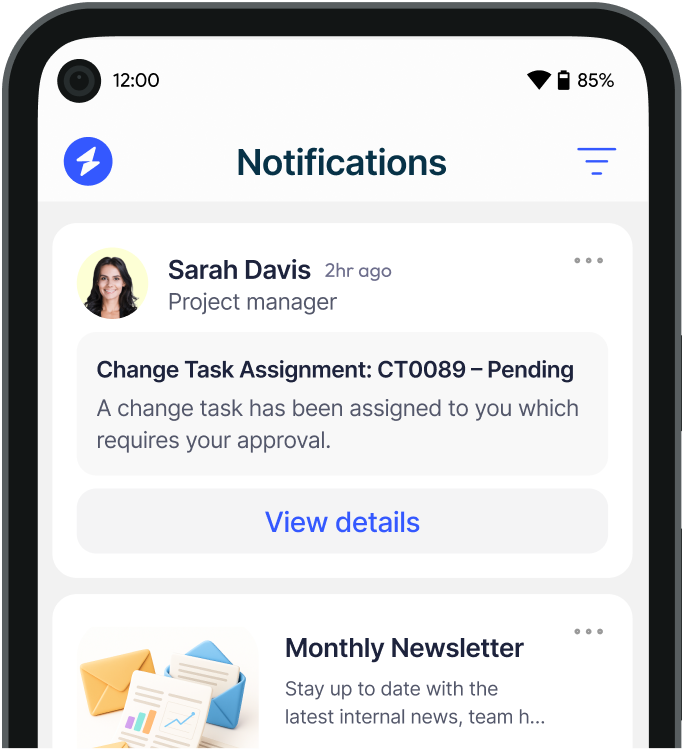
- Desktop alerts that appear instantly on every employee's screen or mobile device
- Persistent emergency banners or tickers
- Lock screen or wallpaper updates carrying important instructions
- Confirmation surveys so employees can acknowledge they've received the message
- Follow-up communications as the situation develops
The objective isn't simply to send information - it's to make sure people actually see it.
Emergencies Rarely Stay Local
Today's workforce is increasingly distributed.
Employees may be working:
- From home
- In regional offices
- On customer sites
- Travelling internationally
- In areas directly affected by severe weather or other incidents
A wildfire in one country may only affect a small percentage of your workforce, but those employees still need clear, timely guidance.
Being able to target communications by location, department or office means you can send relevant information without overwhelming everyone else.
Internal Communications Become Business Continuity
Emergency communications are often viewed as an IT or Health & Safety responsibility.
In reality, they're a critical part of business continuity.
Employees need answers to questions such as:
- Should I travel to the office?
- Is the office open?
- Am I expected to work remotely today?
- Where can I find the latest updates?
- Who should I contact if I need assistance?
The faster these questions are answered, the faster employees can make safe decisions.
The Importance of Two-Way Communication
During an emergency, communication shouldn't be one-way.
It's equally important to understand how employees are affected.
Simple acknowledgement buttons, pulse surveys or check-ins can help organisations quickly understand:
- Who has seen the alert
- Who may require assistance
- Which offices or regions are affected
- Whether additional communications are needed
Having this visibility helps leadership make informed decisions as events unfold.
Preparing Before the Next Incident
Wildfires are only one example.
The same communication challenges arise during:
- Severe weather
- Flooding
- Cyber incidents
- Power outages
- Transport disruption
- Security incidents
- Public health emergencies
The organisations that respond most effectively are rarely those scrambling to build communication processes during a crisis.
They're the ones that have already tested them.
Supporting Employees When It Matters Most
At Heed, we believe employee communications should be immediate, targeted and engaging—particularly when people need them most.
Whether it's an emergency desktop alert, a targeted notification to a specific office, a rotating desktop message or a simple acknowledgement survey, the goal is always the same:
Ensure every employee receives the right information at the right time.
Because during an emergency, communication isn't just about keeping people informed.
It's about helping keep them safe.
Further Reading & Emergency Resources
The recent wildfires affecting Europe and North America highlight how quickly emergency situations can develop. If you'd like to learn more about the current situation or how to prepare for wildfire emergencies, the following resources are worth reading:
Official Wildfire Safety Guidance
- Government of Canada – Get Prepared: Practical advice on creating an emergency plan, preparing an emergency kit, monitoring wildfire information and evacuation planning. Government of Canada – Wildfire preparedness
- Scottish Fire and Rescue Service: Guidance on wildfire prevention, recognising wildfire danger assessments and preparing an evacuation plan. Scottish Fire and Rescue Service – Wildfire prevention
- Scottish Fire and Rescue Service: Check the latest wildfire danger assessments before travelling or carrying out outdoor activities. Current Wildfire Danger Assessments
No organisation can prevent natural disasters, but every organisation can prepare for how it communicates during one.
Whether it's a wildfire, flooding, severe weather, a cyber incident or another unexpected event, having the ability to deliver clear, targeted communications to employees in seconds can make a significant difference to both business continuity and employee safety.
If you'd like to learn how Heed helps organisations communicate during critical situations, we'd be happy to show you how desktop alerts, emergency notifications, digital signage and employee acknowledgements can support your emergency communications strategy.

.svg)


.svg)









.svg)
.svg)