
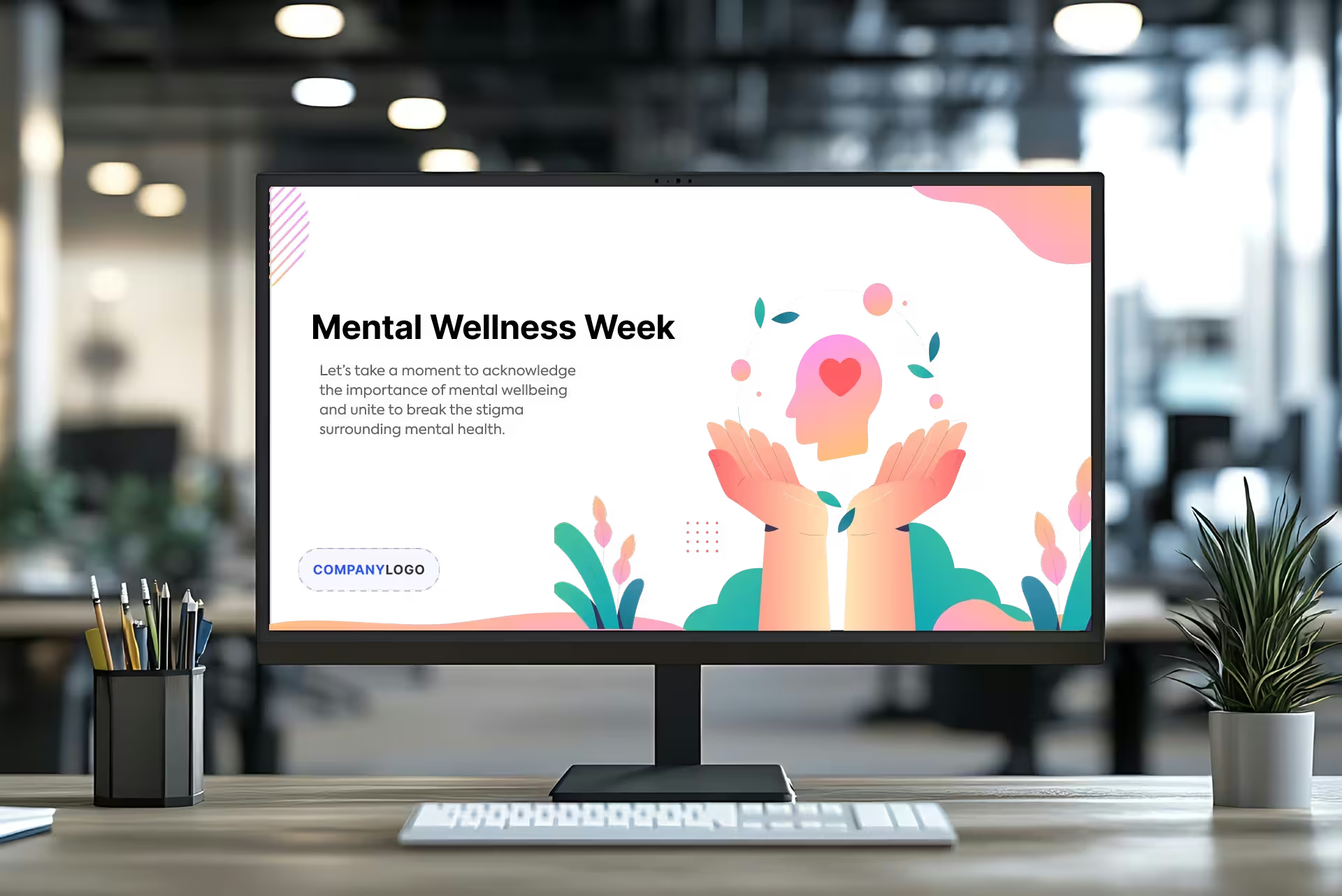
Internal communication is one of the most critical drivers of organisational success, but traditional channels like email, intranets, and Group Policy aren’t always up to the task.
Too often, important messages get buried in crowded inboxes or diluted through one-size-fits-all desktop settings. A purpose-built screensaver and corporate wallpaper tool flips that model on its head by turning every user’s desktop into a strategic communication surface.
Here’s why organisations are moving beyond Group Policy and why it matters.
At a Glance
The Challenge: Many organisations use Group Policy to control screensavers and wallpapers but it was built for device configuration, not communication.
The Gap: Group Policy delivers static, one-size-fits-all images with no targeting, scheduling, campaign control or meaningful reporting.
The Opportunity: A dedicated desktop communication tool transforms screensavers and wallpapers into a high-visibility, measurable channel for internal comms, security awareness and culture initiatives.
The Result: More relevant messaging, better reach across hybrid workforces, and less manual effort for IT while giving communications teams real control.
Table of Contents
- The Cost of Ineffective Internal Communication
- Why Group Policy Falls Short
- Static, One-Size-Fits-All Messaging
- No Scheduling or Campaign Control
- No Feedback or Reporting
- Limits in Hybrid & Remote Environments
- What a Dedicated Communications Tool Brings
- Targeted Messaging
- Campaign Scheduling
- Rich, Dynamic Content
- Reporting & Visibility
- Built for Modern Endpoints
- Screensavers & Wallpapers: More Than Just Backgrounds
- The Bottom Line
- FAQs: Corporate Screensaver & Wallpaper Communication
The Cost of Ineffective Internal Communication
Before we dive into solutions, here’s what the research says about internal communication today:
- Poor internal communication is cited as a reason for workplace failure by as many as 86% of employees and executives, and ineffective communication is linked to low engagement and organisational disconnect.
- Companies with effective internal communications are up to 3.5× more likely to outperform competitors and see significantly higher employee engagement and clarity.
- Organisations that invest in digital workplace tools report improved communication with colleagues and higher employee engagement.
These trends reflect a simple truth: communication matters and the channels you choose shape organisational outcomes.
Why Group Policy Falls Short
Group Policy is a foundational tool for configuration management in Windows environments, including desktop wallpapers and screensavers. But it wasn’t designed for communication and that distinction makes all the difference.
❌ One Static Message for Everyone
With Group Policy, every endpoint gets the same image. You can’t tailor messages to specific groups, teams, or roles. Modern communication strategy thrives on relevance not uniformity.
❌ No Scheduling, No Campaign Control
Want to run a safety campaign for a week? Rotate seasonal announcements? Or retire old messaging automatically after an event?
Group Policy doesn’t support any of this without manual intervention meaning your IT team ends up doing message management instead of real IT work.
❌ No Feedback or Reporting
Traditional policy deployment tells you that the image was set not whether users saw it or engaged with it. For communications and change management, that’s a major blind spot.
❌ Limits in Hybrid and Remote Environments
In today’s distributed workplaces, many devices are off-domain or outside the office network. Group Policy updates can lag or fail entirely for remote users, creating inconsistency in experience and message reach.
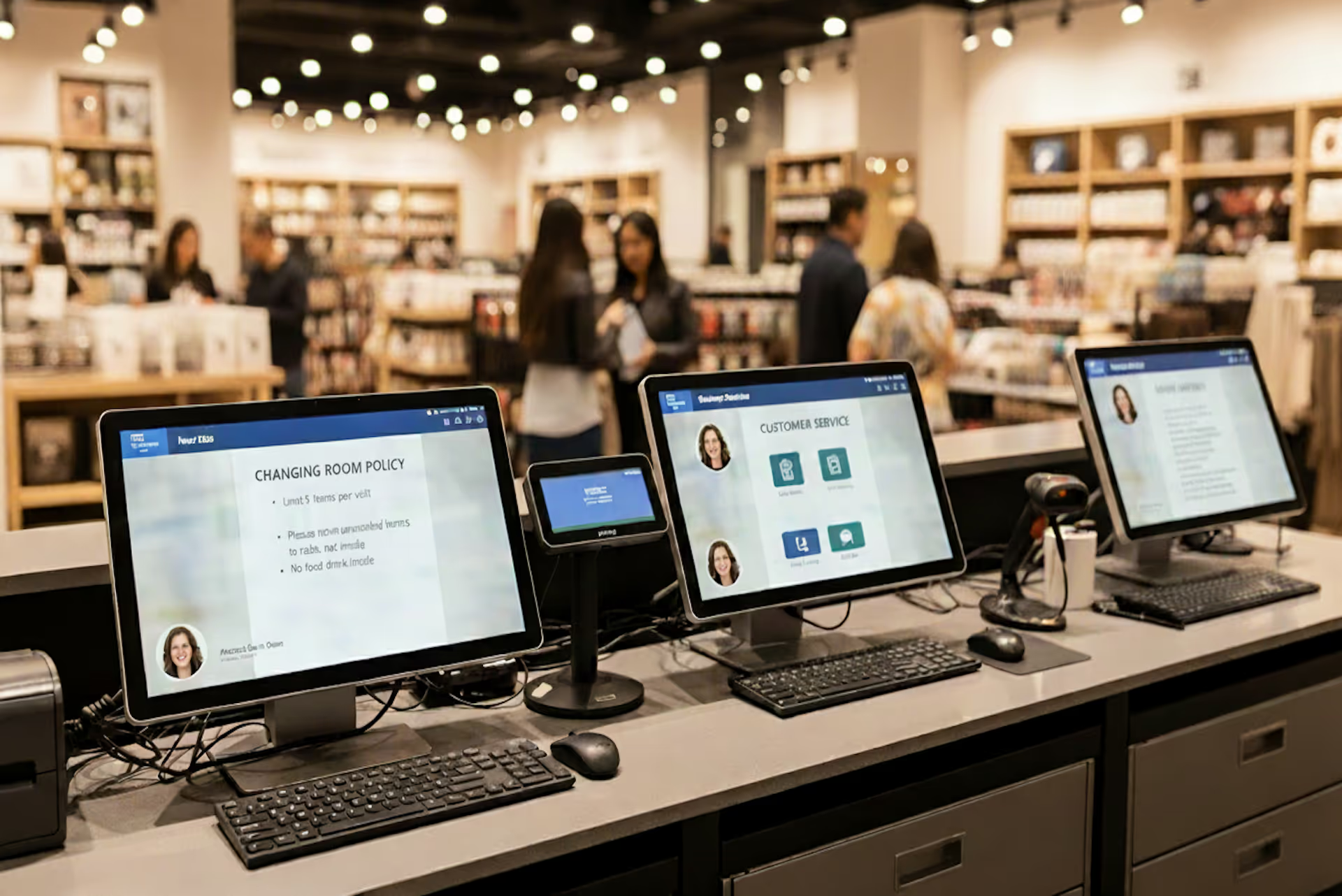
❌ Struggles with Different Screen Resolutions
Modern organisations don’t run a single screen standard anymore. You’ll typically see a mix of: Laptops (13”, 14”, 15”, 16”), External monitors (Full HD, QHD, 4K), Ultrawide displays and so on. Group Policy simply wasn’t built with this diversity in mind.
When you deploy a single wallpaper or screensaver image via Group Policy, you often run into stretching or distortion, black bars on widescreens, cropping of important visuals n blurry images on high-resolution displays. This isn't just a cosmetic issue, it drectly affects brand consistency, readability of key information and professional perception of internal communications
What a Dedicated Communications Tool Brings
A focused corporate screensaver and wallpaper solution treats desktop messaging as what it truly is - a communication channel.
✅ Targeted, Relevant Messaging
Send different visuals to:
- Departments or teams
- Locations or business units
- Roles or security groups
This ensures your message lands where it matters most, increasing recognition, engagement and recall.
✅ Scheduled Campaigns & Automated Control
Launch, rotate, and retire campaigns on time without manual edits to policy objects. Whether it’s a monthly safety reminder or a CEO town-hall update, content flows on your schedule.
✅ Rich, Dynamic Content
Static wallpapers are fine for branding but what about:
- Safety updates
- Recognition banners
- Event promo graphics
- QR codes linking to surveys or resources
- Logo animations or themed visuals
These make the desktop a living communication surface, not just background.
✅ Visibility & Assurance
Now your internal comms and IT teams can see delivery status, device coverage, and campaign reach. Measurement matters especially when you’re aligning on company goals and behaviours.
✅ Resolution-Aware Delivery with a Dedicated Tool
Instead of treating wallpapers and screensavers as static files pushed via policy, a purpose-built desktop communication platform like Heed:
- Detects device display characteristics
- Adapts visuals to different resolutions and aspect ratios
- Ensures important content (logos, headlines, calls to action) remains visible
- Delivers sharp visuals on high-DPI and 4K screens
The result is consistent, professional messaging across the organisation whether someone is on a small laptop at home or a dual-monitor setup in the office.
✅ Built for Today’s Work Landscape
With remote and hybrid work the norm, communications tools need to go where workers are including off VPN or outside traditional domain controls. A dedicated tool meets this need by leveraging cloud connectivity and intelligent agents.
Screensavers & Wallpapers: More Than Just Backgrounds
Think of screensavers and wallpapers as ambient communication: subtle, persistent, and always visible. They don’t interrupt employees like a pop-up or clog up inboxes like an email. Instead, they reinforce messages throughout the day without friction.
This mirrors findings from digital workplace research: when communication is visible and persistent, employees feel more informed and aligned which drives engagement and performance.
The Bottom Line
Your users spend a huge portion of their day on their desktops. That space isn’t digital real estate -it’s strategic real estate.
If your internal communication goals matter whether that’s driving safety behaviours, reinforcing culture, or keeping people informed, then leaving desktops to static policy deployment is like leaving the company newsletter unread in an old intranet.
It’s time your desktop became part of the conversation.
If you are weighing up dedicated tools, see how Heed compares with DeskAlerts for screensaver, wallpaper and alert management.


.svg)


.svg)






.avif)

.svg)
.svg)