

Building a strong workplace starts with listening.
A well-designed Voice of the Employee programme helps organisations capture feedback, understand employee sentiment and take meaningful action. But many teams struggle to know where to begin.
In this guide, you’ll learn how to build a Voice of the Employee (VoE) programme from scratch, with practical steps you can implement immediately.
At a Glance
- A Voice of the Employee (VoE) programme is a continuous system for collecting, analysing, and acting on employee feedback
- Start with clear goals such as improving engagement, retention or communication
- Use multiple feedback channels like pulse surveys, polls, and always-on feedback tools
- Build trust and psychological safety so employees feel comfortable speaking up
- Keep feedback simple, regular, and consistent to maximise participation
- Focus on identifying trends, not just one-off comments
- Turn insights into visible action quickly to maintain credibility
- Always close the feedback loop by communicating what’s changed
- Avoid common mistakes like survey fatigue and failing to act on feedback
- The most successful programmes create a cycle of feedback → action → communication → trust
Table of Contents
What is a Voice of the Employee Programme?
Why Your Organisation Needs a VoE Programme
Step 1: Define Your Voice of the Employee Goals
Step 2: Choose the Right Employee Feedback Channels
Step 3: Create a Safe Environment for Honest Feedback
Step 4: Keep Your VoE Programme Simple and Consistent
Step 5: Analyse Employee Feedback Effectively
Step 6: Take Action on Employee Feedback
Step 7: Close the Feedback Loop
Tools to Support Your Voice of the Employee Programme
Common Voice of the Employee Mistakes to Avoid

What is a Voice of the Employee Programme?
A Voice of the Employee (VoE) programme is a structured, ongoing approach to collecting, understanding and acting on employee feedback. It gives organisations a clear framework for listening to their people and using those insights to improve how the business operates.
At its core, a VoE programme is about more than just asking questions. It’s about creating a consistent feedback loop where employees can share their experiences, leaders can respond, and meaningful change can happen.
Unlike traditional annual surveys, which often provide a delayed and limited snapshot, a modern VoE programme is designed to be continuous, dynamic and responsive.
It typically focuses on:
- Continuous listening – capturing feedback regularly rather than once a year, so you always have an up-to-date view of employee sentiment
- Real-time feedback – enabling employees to share thoughts in the moment, not weeks or months later
- Actionable insights – turning raw feedback into clear trends and priorities that leaders can act on
- Ongoing communication – keeping employees informed about what’s being done in response to their feedback
A strong VoE programme connects these elements into a single, consistent process. Feedback isn’t collected and forgotten: it’s analysed, prioritised and used to drive decisions across the organisation.
Ultimately, the goal is simple: turn employee feedback into better decisions and stronger engagement. But the impact goes further creating a workplace where employees feel heard, valued and motivated to contribute.
-> 5 Ways to Boost Employee Happiness Using Smart Well-Being Surveys
Why Your Organisation Needs a VoE Programme
Organisations that actively listen to employees benefit from:
- Higher employee engagement
- Improved retention rates
- Better decision-making
- Stronger workplace culture
When done well, it becomes part of everyday business operations, helping leaders:
- Identify issues early before they escalate
- Understand what’s really happening across teams
- Make more informed, people-focused decisions
- Build trust through transparency and action
Without a clear VoE strategy, feedback becomes inconsistent and valuable insights are often lost.
-> The Importance Of Giving Employees A Voice
Step 1: Define Your Voice of the Employee Goals
Start by identifying what you want your VoE programme to achieve.
Common goals include:
- Improving employee engagement
- Reducing staff turnover
- Supporting organisational change
- Understanding frontline challenges
Align your goals with measurable outcomes so you can track success over time.
Step 2: Choose the Right Employee Feedback Channels
To build an effective Voice of the Employee programme, you need multiple feedback channels.
These may include:
- Pulse surveys (short, frequent surveys)
- Anonymous feedback tools
- Employee polls
- Always-on feedback channels
A multi-channel approach ensures you capture feedback from all employees not just the most vocal.
Step 3: Create a Safe Environment for Honest Feedback
Trust is essential for any VoE programme.
Employees must feel comfortable sharing honest opinions without fear of consequences.
Best practices include:
- Offering anonymous feedback options
- Encouraging open communication
- Demonstrating leadership transparency
Without trust, even the best-designed VoE programme will fail.
Step 4: Keep Your VoE Programme Simple and Consistent
One of the biggest mistakes organisations make is overcomplicating employee feedback.
Avoid:
- Long, infrequent surveys
- Too many questions
- Inconsistent communication
Instead, focus on:
- Short, regular feedback cycles
- Clear and relevant questions
- Consistent engagement
Consistency increases participation and improves data quality.
Step 5: Analyse Employee Feedback Effectively
Collecting feedback is only valuable if you can interpret it.
Focus on:
- Identifying trends over time
- Spotting recurring issues
- Comparing results across teams
Effective analysis transforms raw feedback into actionable insights.
Step 6: Take Action on Employee Feedback
This is where most Voice of the Employee programmes fall short.
To succeed, you must:
- Prioritise key issues
- Take visible action
- Deliver quick wins where possible
Employees need to see that their feedback leads to real change.
Step 7: Close the Feedback Loop
Closing the loop is critical to building trust and maintaining engagement.
Communicate clearly:
- What feedback was received
- What actions are being taken
- What employees can expect next
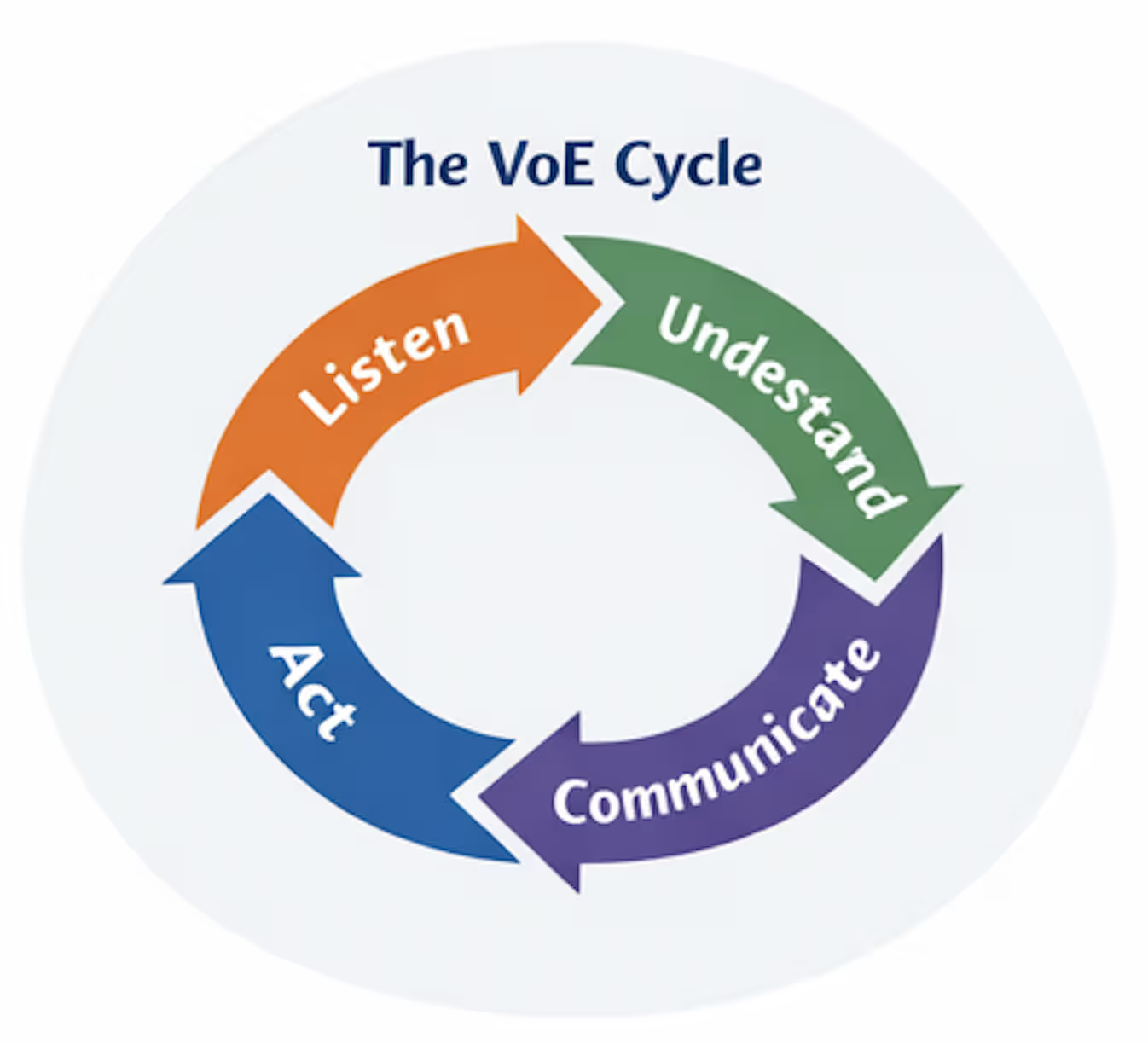
A strong feedback loop creates a continuous cycle:
Feedback → Action → Communication → Trust
Tools to Support Your Voice of the Employee Programme
The right technology can significantly improve your VoE strategy.
Platforms like Heed help organisations:
- Collect real-time employee feedback
- Enable anonymous communication
- Reach employees across multiple channels
- Analyse engagement data
- Communicate actions effectively
By bringing feedback and communication into one place, tools like Heed make it easier to turn insight into action.
Common Voice of the Employee Mistakes to Avoid
When building your programme, watch out for these common pitfalls:
- Asking for feedback but not acting on it
- Over-surveying employees
- Ignoring frontline workers
- Failing to communicate results
Avoiding these mistakes can significantly improve participation and trust.
Building a Successful VoE Programme
Creating a Voice of the Employee programme from scratch doesn’t have to be complicated.
Focus on the fundamentals:
- Make feedback easy
- Listen continuously
- Act quickly
- Communicate transparently
With the right approach (and the right tools) you can build a VoE programme that drives real business impact.

.svg)


.svg)









.svg)
.svg)