
Choosing a newsletter name sounds simple until you try it. A name such as Staff Newsletter tells employees nothing and a clever pun can date quickly or exclude people who do not get the joke. The 127 newsletter name ideas on this page are grouped by style, industry and department, so you can build a shortlist in a few minutes, followed by practical advice on choosing and testing newsletter names. For help with what goes inside each issue, see our guide to employee newsletter ideas.
A good newsletter name is short, easy to say aloud and clear about who the newsletter is for. It reflects the tone of your organisation, still makes sense in two years and works in an email subject line. The best newsletter names are the ones employees use themselves when they talk about the publication.
Use these lists as a starting point. Many of the names can be combined with your company name, a location or a send day, for example The [Company] Bulletin or The Friday Round-Up.
These names suit organisations that want the newsletter to read as an official, dependable source. They work well in regulated sectors and for leadership-led updates.
Borrowing from newspapers and broadcasting tells employees to expect timely news. Pair these with a consistent send day so that the name and the habit reinforce each other.
If most of your content covers recognition, new starters and team stories, choose a name that puts people first.
A relaxed name sets expectations for a lighter tone. These suit smaller organisations and teams with an informal culture.
These names suit organisations in a period of growth or change, and newsletters that focus on strategy, progress and what happens next.
A name drawn from the language of your sector feels familiar to employees and signals that the newsletter is written for them, not copied from a template. Check that the term is understood by every team, including office staff who do not work on the front line.
Department newsletters need names that distinguish them from the all-company edition, so that employees can tell at a glance which one has arrived.
To choose a newsletter name, start with the audience and the tone of the publication, draft a shortlist of five to ten options, and remove any that are unclear, hard to say or already in use. Then test the remaining names with a small group of employees, or put the final choice to a vote.
The simplest way to create an original newsletter name is to combine your company name, or part of it, with a publication word such as Bulletin, Post, Times, Digest or Weekly. The result is distinctive, obviously internal, and unlikely to clash with any other newsletter your employees receive.
Avoid newsletter names that are generic, hard to understand or likely to date. Names such as Staff Newsletter or Company Update are easy to overlook, while acronyms, in-jokes and references to a specific year, project or leader can confuse new starters and will need changing sooner than you expect.
Rename an existing newsletter only when there is a clear reason, such as a merger, a rebrand, a change of audience or a relaunch after a period of low readership. A new name will not fix weak content on its own, so pair it with a visible change to the format, the sections or the schedule.
If you do rename, announce the change in the final issue under the old name, explain the reason in a sentence or two, and keep the sender name and send day the same so that employees still recognise it. Our company newsletter examples show how different organisations use a consistent template for announcements, HR updates and events.
Heed is all-in-one internal communication software that connects with and engages employees across desktop, mobile and digital signage. Its company newsletter software includes a drag-and-drop editor, so that once you have a name you can build a branded header and layout without design or coding skills. Newsletters can be sent by email, scheduled in advance, segmented by department, region or role, and tracked by open rate and clicks.
Have a name and need a layout to match? Browse the Heed newsletter templates for announcements, HR updates, employee spotlights, team updates and events.
See how Heed streamlines internal communication across desktop, mobile, and shared screens - so every message gets noticed.
We’ll walk you through creating, targeting, and tracking notifications in real time, tailored to your organisation’s goals.
Schedule a Demo
See how Heed works across your channels, sites and shifts, and get answers to the questions specific to your industry and team size.
Schedule a Demo




Talk to us about keeping your employees informed, engaged and inspired - book a call today!
Book a Call
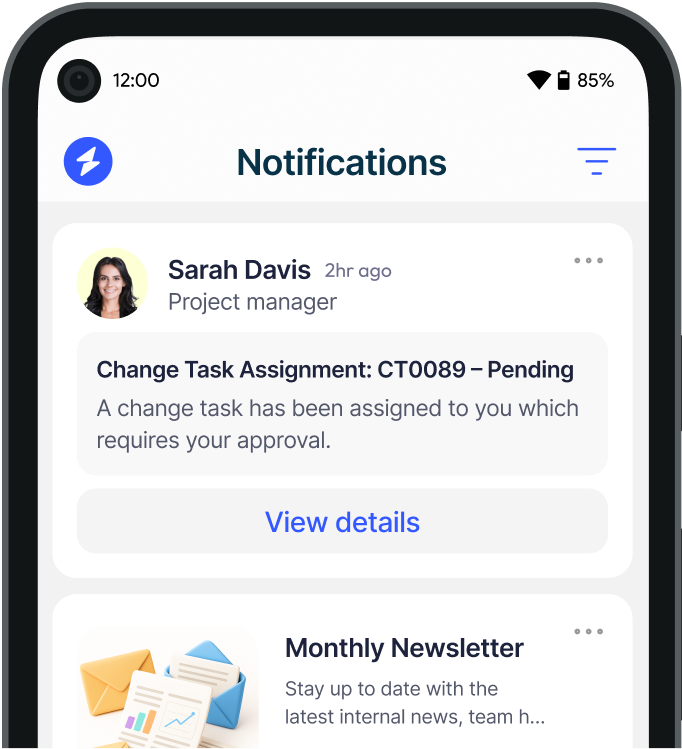
Proudly connecting teams worldwide, enhancing communication, and boosting employee engagement for a unified workforce.


© Heed 2026 - All Rights Reserved


